
A while ago I saw this project from rootkid called Spectrum Slit https://rootkid.me/works/spectrum-slit. I thought it was really cool. I showed it to a bunch people because I really liked the idea. Now if you know me or have read any of my drivel here you know I can’t leave things alone when I see them. So I built my own. It’s not the same by any means but it uses the same idea.
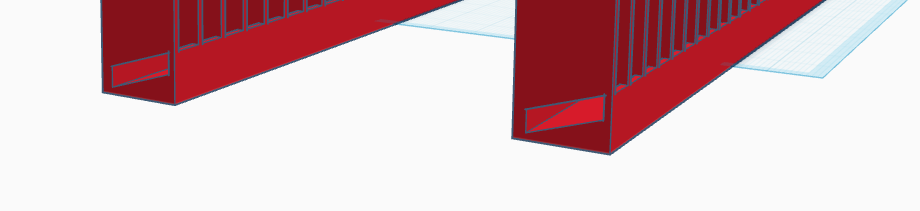
I took a different route with the hardware and the code. My frame is 3D printed using some Bambu Lab Wood PLA. I printed it on my P1S. It handled the odd overhangs I used very well. I used Tinkercad to design the 3D printed parts.

The frame is designed for a 1M WS2812B 144LED 5050 addressable LED strip. There is a little slit in the bottom to allow the LEDs to be inserted and the channels are the size of a single LED.
Instead of any custom hardware I went with a Raspberry Pi 4. I just had one lying around so I used it. You can probably use something else. For the radio I used a Pluto+ SDR because a HackRF One was more expensive. There are a bunch of other components for power delivery and such but you can power all of this off the Pi’s headers and USB. Just don’t light the LEDs to full strength or you’ll overload it.
The software on the Pi is just a bunch of Python there is a web interface that runs for configuration and a display on the web interface that mimics the actual device.
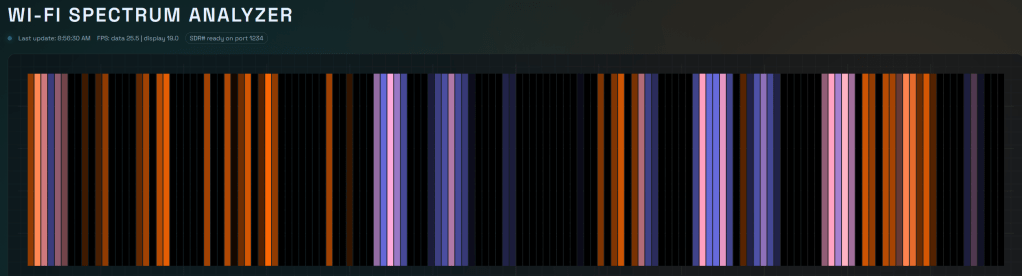
It handles 2.4ghz and 5ghz wifi spectrums automatically and assigns a customizable color to each. The display overlaps them and blends the colors where necessary.
Go watch rootkid’s video if you want more info. The code is really messy and I’m not sure I want to be responsible for anyone burning down their house with the power distribution sooooo if you want to make one, figure it out yourself. It will be good for you.

